
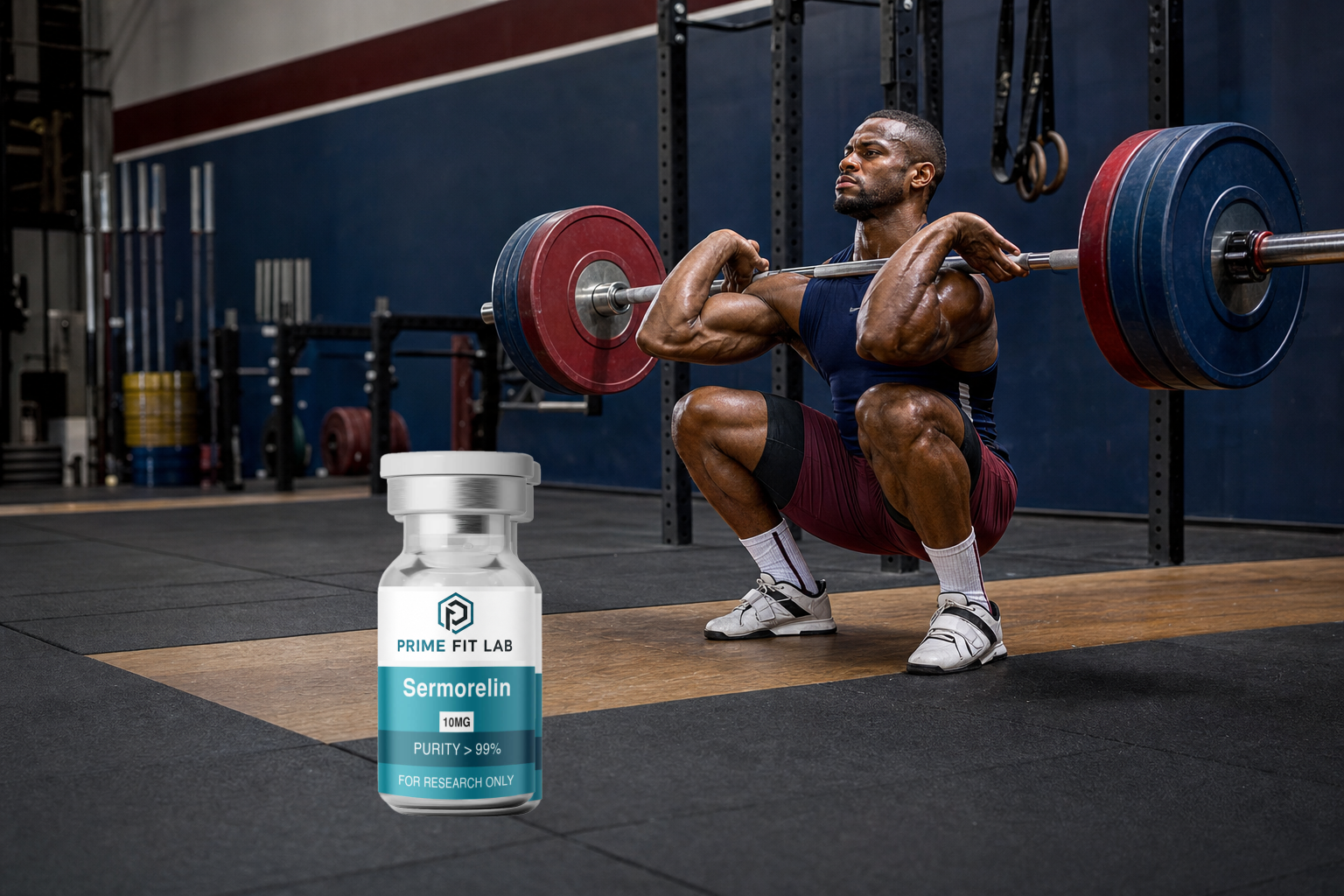
Ipamorelin versus sermorelin research is not a simple comparison of two catalog names. The compounds differ in peptide length, receptor pathway, analytical considerations, and the experimental questions they are suited to address. For qualified laboratories, the more useful starting point is not a presumed outcome, but a documented plan: define the model, select fit-for-purpose assays, and verify the material before it enters the workflow.
Both compounds are commonly grouped with growth hormone secretagogue research, yet they approach that signaling area through different mechanisms. That distinction affects how researchers interpret assay design, controls, timing, and data limitations. Neither compound should be treated as interchangeable simply because both appear in the same broader research category.
Ipamorelin Versus Sermorelin Research Starts With Mechanism
Sermorelin is a synthetic peptide corresponding to the first 29 amino acids of growth hormone-releasing hormone, commonly described as GHRH(1-29) amide. In experimental settings, it is used to investigate signaling associated with the growth hormone-releasing hormone receptor. Because the receptor is associated with anterior pituitary tissue, model selection is central. A cell-free analytical method, a receptor-focused system, and a more complex endocrine model do not answer the same question.
Ipamorelin is a shorter, five-amino-acid peptide studied as a growth hormone secretagogue receptor agonist. Its primary research interest is generally tied to GHSR-1a activity, the receptor often associated with ghrelin-mediated signaling. Early pharmacology literature has characterized ipamorelin as having comparatively selective secretagogue activity under particular experimental conditions. That description should not be generalized beyond the methods, models, and endpoints actually used.
The practical distinction is receptor origin. Sermorelin research typically begins with a GHRH-pathway question, while ipamorelin research begins with a GHSR-pathway question. A project examining receptor engagement, signal transduction, assay response, peptide stability, or pathway cross-talk should state that distinction clearly in its protocol.
Peptide Structure Changes the Analytical Conversation
The structural gap between a 29-residue peptide and a pentapeptide is substantial. Peptide length can influence chromatographic behavior, sample-preparation choices, degradation profiles, and method-development priorities. It can also change what an analyst needs to confirm when reviewing identity data.
For sermorelin, laboratories may focus closely on sequence-related impurities, truncations, deletions, oxidation, deamidation, and aggregation behavior where relevant to the method. For ipamorelin, the smaller molecular structure may simplify some aspects of mass confirmation, but it does not eliminate the need to evaluate related substances, residual reagents, moisture exposure, or handling-related degradation.
High-performance liquid chromatography and mass spectrometry serve different but complementary purposes. A chromatographic purity result can help characterize the relative abundance of the target peak under stated conditions. Mass spectrometry supports molecular identity confirmation. Neither result alone provides a complete quality profile. Researchers should read the actual certificate of analysis rather than relying only on a product-page purity statement.
A 99%+ purity claim may be appropriate for certain research workflows, but suitability still depends on the application. A screening experiment, a quantitative reference workflow, and a sensitive mechanistic study may each require different acceptance criteria. Purity is an important decision point, not a substitute for method validation.
Match the Compound to the Research Question
A useful comparison asks what the experiment is trying to distinguish. If the objective is to evaluate a GHRH-receptor-associated response in an appropriate model, sermorelin may be the more direct research material. If the objective concerns GHSR-1a-associated activity, ipamorelin may better align with the experimental hypothesis.
There are also cases where using both compounds is scientifically reasonable. Comparative pathway work may use them as distinct probes to examine receptor specificity, downstream readouts, temporal response patterns, or the effect of pathway-specific antagonists. In that setting, they should be treated as separate experimental variables, not as equivalent replacements.
Controls matter as much as compound selection. A well-designed study may include vehicle controls, assay-performance controls, receptor-negative or receptor-suppressed conditions where appropriate, and independently verified reference materials. The exact control set depends on the platform, but the principle is consistent: a response is only interpretable when the system demonstrates that it can separate signal from background and pathway-specific activity from nonspecific effects.
Researchers should also avoid extending findings from one model to another without justification. Receptor expression, culture conditions, matrix effects, species differences, and assay timing can all alter observations. Published findings are useful context, but they do not replace validation under the laboratory's own conditions.
Documentation Is Part of the Research Material
For research-use-only peptides, documentation should travel with the vial, not remain as a marketing detail. The most reliable purchasing and receiving process connects the product label, lot number, certificate of analysis, internal inventory record, and experimental notebook or electronic laboratory system.
Before introducing ipamorelin or sermorelin into a study, review the identity designation, stated net content, lot or batch identifier, purity method, test date, and storage instructions. Confirm that the COA corresponds to the received lot. If a supplier provides contaminant or heavy-metal screening information, review the scope of those tests rather than assuming every potential impurity class was assessed.
A COA is valuable because it makes the supplier's quality claims auditable. It is not a blanket guarantee that the material is suitable for every assay or that it meets requirements not specifically tested. For example, a chromatographic purity result does not automatically establish sterility, endotoxin status, bioburden limits, or suitability for a particular regulated workflow. Those attributes require their own documented methods and acceptance criteria.
Prime Fit Lab presents research compounds with lot-level documentation and stated 99%+ purity standards to help qualified buyers evaluate materials before purchase. Researchers should still apply their institution's procurement, receiving, and analytical verification procedures to every lot.
Storage and Handling Can Influence Comparative Results
Storage consistency is particularly important when a study compares two peptides. If one material is exposed to repeated temperature cycling, prolonged ambient handling, or uncontrolled humidity while the other is not, observed differences may reflect sample condition rather than receptor biology.
Follow the supplier's current label and COA instructions for unopened material and prepared analytical samples. Keep a record of receipt date, storage location, container condition, and each sample-preparation event. Where a method requires reconstitution or dilution, document the solvent, concentration, container type, preparation date, and any hold-time limits established by the laboratory.
Avoid creating a false sense of precision with generic storage advice. The appropriate conditions depend on the supplied form, container closure, method, and stability evidence. A laboratory with a validated stability protocol should follow that protocol; a laboratory without one should treat stability as a variable to assess, not an assumption.
A Receiving Check Before Any Research Use
When comparing materials across lots or suppliers, a short receiving check can prevent avoidable ambiguity later. Verify four essentials before the compounds are assigned to an experiment:
- The product name, peptide form, lot number, and stated quantity match the purchase record.
- The certificate of analysis identifies the same lot and clearly states the testing method and reported result.
- Packaging integrity and storage history during receipt are documented according to laboratory procedure.
- The material is entered into inventory with a traceable link to the study, assay, or method-development project.
This process is not administrative overhead. It preserves traceability if a chromatogram changes, an assay result cannot be reproduced, or a comparison needs to be repeated months later. In peptide research, the ability to reconstruct material history is often as valuable as the first result.
Research-Use Boundaries Remain Clear
Ipamorelin and sermorelin offered through research-compound channels are intended for qualified laboratory and analytical research only. They are not approved products for diagnosing, treating, curing, or preventing disease, and product information should not be interpreted as dosing guidance or advice for personal use.
For biotechnology teams and independent qualified researchers, the strongest comparison is therefore a disciplined one: receptor pathway, model relevance, analytical confirmation, documented quality attributes, and controlled handling. Start with the question your assay must answer, then select the peptide material and documentation standard that allow the resulting data to stand up to review.