
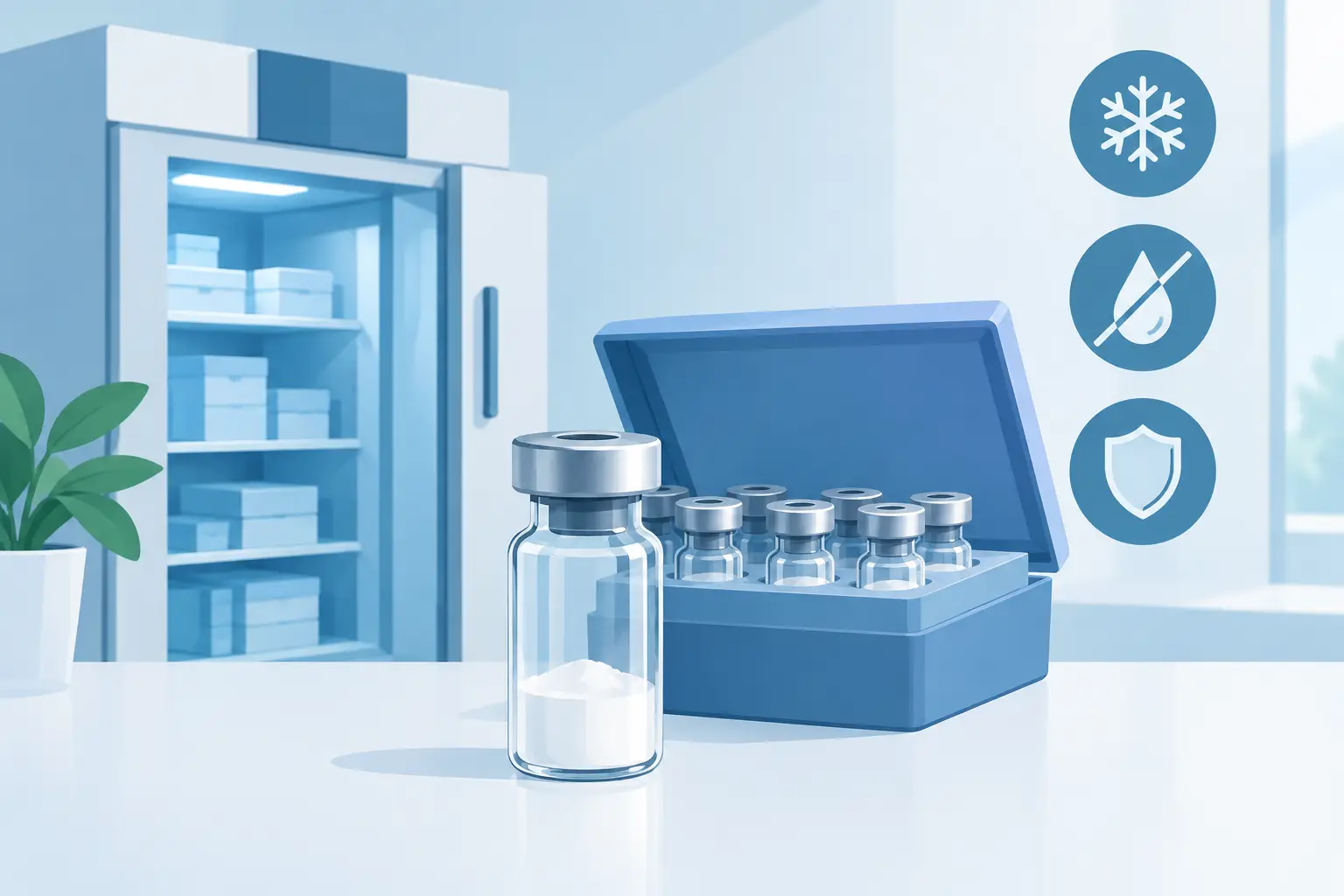
A peptide vial can leave a controlled storage environment in excellent condition and lose research value later through a simple handling error: repeated warming, an unsealed cap, or incomplete sample records. Knowing how to store lyophilized peptides is therefore part of protecting identity, purity, and consistency across an experimental workflow.
Lyophilization removes water from a peptide preparation, generally improving stability relative to a peptide held in solution. It does not make the material immune to degradation. Temperature, moisture exposure, light, vial integrity, and handling frequency all still matter. The controlling instruction is always the product-specific label, certificate of analysis, and supplier documentation. Storage conditions can vary by sequence, formulation, vial closure, intended research application, and validated shelf-life data.
Start With the Product Documentation
Before placing a vial into any refrigerator or freezer, review the product label and accompanying documentation. Confirm the compound name, lot number, net content, storage recommendation, retest date or expiration date where provided, and any special handling notes. A certificate of analysis supports identity and quality review, but it should be retained with the receiving record rather than treated as a replacement for a storage log.
For qualified research teams, the receiving process should document the date received, package condition, quantity, lot number, assigned storage location, and the individual responsible for intake. This creates a defensible chain of custody from delivery through use. It also makes it easier to identify which materials may have been affected if a refrigerator, freezer, or building system experiences an excursion.
When purchasing research materials, verify that the supplier provides clear lot-level information and accessible documentation. Prime Fit Lab presents research-use-only products with stated 99%+ purity standards, third-party testing information, and COA access to help researchers review product records before adding materials to their inventory.
How to Store Lyophilized Peptides by Temperature
Temperature is the first storage variable most laboratories consider, but the right answer is not universal. Follow the supplier's stated conditions first. In many research settings, unopened lyophilized peptide vials are stored refrigerated at 2-8°C for shorter-term access or frozen at approximately -20°C for longer-term storage. Some materials may require colder conditions, while others have validated stability at refrigerated temperatures for a defined period.
The practical distinction is between active inventory and archive inventory. If a vial will be accessed in the near term, a properly monitored refrigerator may reduce unnecessary freeze-thaw handling. If it is being retained for later research, freezer storage may be more appropriate when supported by the product documentation.
Avoid making storage decisions based only on what is common for another peptide. A structurally different compound, blend, or formulation may have different stability characteristics. Supplier instructions and your laboratory's validated procedures should take priority over generalized online guidance.
Temperature consistency matters as much as the nominal setting. A refrigerator that cycles widely, a freezer that is frequently opened, or a vial stored in the door rather than a stable interior location can expose samples to repeated fluctuations. Place peptide inventory in a designated, monitored section of the unit, away from fans, doors, and materials that may leak or contaminate the storage area.
Prevent Condensation During Retrieval
Condensation is a frequent and avoidable risk for lyophilized materials. When a cold vial is removed into warmer, humid room air, moisture can condense on the exterior. If the closure is compromised or opened before the vial equilibrates, humidity may reach the dried peptide.
For a vial that must be opened, allow the sealed container to reach room temperature before opening it. This reduces the chance that atmospheric moisture enters a cold vial. Once the necessary work is complete, reseal the vial promptly and return it to its validated storage condition without leaving it on the bench longer than needed.
A useful operational rule is simple: retrieve only the material required for the immediate procedure. Repeatedly removing the same vial for planning, inventory checks, or small transfers adds avoidable exposure. Where the workflow permits, consider appropriately sized vials or controlled aliquoting procedures designed by the laboratory to limit handling of the primary stock.
Keep Moisture and Light Out
A lyophilized peptide is particularly vulnerable to moisture. Water can change the physical condition of the material and may accelerate chemical degradation pathways. Keep vials tightly closed in their original packaging whenever possible. If secondary containment is used, choose clean, dry, clearly labeled containers that protect the vial from moisture, breakage, and accidental mix-ups.
Desiccant can be useful inside an appropriate sealed secondary container, provided it does not obstruct labels or create contamination concerns. Replace saturated desiccant according to laboratory procedure. Do not assume that an outer package alone provides indefinite humidity protection after it has been repeatedly opened.
Light protection also depends on the compound and its packaging. If the label or supplier documentation indicates light sensitivity, keep the vial in its original carton, an opaque storage box, or another validated light-protective container. Amber glass may help with some light exposure concerns, but it does not eliminate the need to follow the stated storage instructions.
Organize Storage for Traceability, Not Convenience Alone
A crowded freezer can compromise sample control. Vials become difficult to locate, labels rub off, and researchers may leave doors open while searching. A simple location system reduces all three problems.
Assign each vial a traceable position, such as unit, shelf, rack, box, and slot. Record that location in the inventory system along with the lot number and storage requirement. Labels should remain legible at low temperatures and include, at minimum, the compound identifier, lot number, date received, and any internal sample ID required by the laboratory.
Use an organized quarantine process for materials with damaged packaging, an unknown temperature history, missing documentation, or suspected moisture exposure. Do not return questionable material to general inventory based on appearance alone. The dried cake or powder may look unchanged even when a storage deviation has affected research suitability.
Monitor Excursions and Document Decisions
A temperature log is only valuable if someone reviews it. Refrigerators and freezers holding research peptides should use calibrated or otherwise verified monitoring equipment, with documented alarm thresholds where feasible. Establish a response procedure for power loss, equipment failure, door-ajar events, and out-of-range temperatures.
If an excursion occurs, record the date, duration, highest or lowest observed temperature, affected lots, and corrective action. Then compare the event with product-specific stability information and internal quality procedures. The appropriate outcome may range from no action to segregation, further analytical review, or disposal. It depends on the material, the exposure, and the evidence available.
Avoid relying on a blanket statement that a peptide is "still fine" after an excursion. Research quality depends on controlled conditions and documented decisions, not assumptions. For high-value studies, it may be appropriate to reserve retained reference material or build confirmatory analysis into the project plan.
Separate Lyophilized Storage From Reconstituted Storage
This distinction prevents many avoidable errors. A peptide that remains lyophilized is not subject to the same storage considerations as a peptide reconstituted into a solvent. Once reconstituted, stability can depend on solvent composition, concentration, pH, microbial control, container compatibility, light exposure, and the number of freeze-thaw cycles.
Do not apply dry-vial storage instructions to a reconstituted sample. Create a separate record that identifies the preparation date, solvent or buffer, concentration, preparer, storage condition, and defined use period under your laboratory's method. If no validated post-reconstitution stability information is available, treat the solution as a new handling question rather than extending dry-storage assumptions.
A Practical Receiving-to-Storage Workflow
The strongest storage system begins before the vial reaches the freezer. On delivery, inspect the package promptly and compare its contents against the order record. Confirm that vial labels and lot identifiers match the documentation. Transfer materials to their specified storage condition as soon as practical, particularly when shipment packaging includes temperature-control components.
Keep a clean separation between receiving, documentation review, and long-term storage. A vial should not sit in a general mail area while staff wait to reconcile paperwork. Likewise, do not place an item into inventory until its identity, condition, and location are recorded.
For laboratories ordering on a recurring basis, consistency is more valuable than a complicated process. A short receiving checklist, controlled storage map, routine temperature review, and clear procedure for deviations will protect research materials far better than informal memory.
Careful storage is not merely an administrative task. It is how a laboratory preserves the value of the material it has selected, documented, and planned to study. Treat each lyophilized peptide vial as a controlled research input from the moment it arrives, and the quality of the downstream work will be easier to defend.