
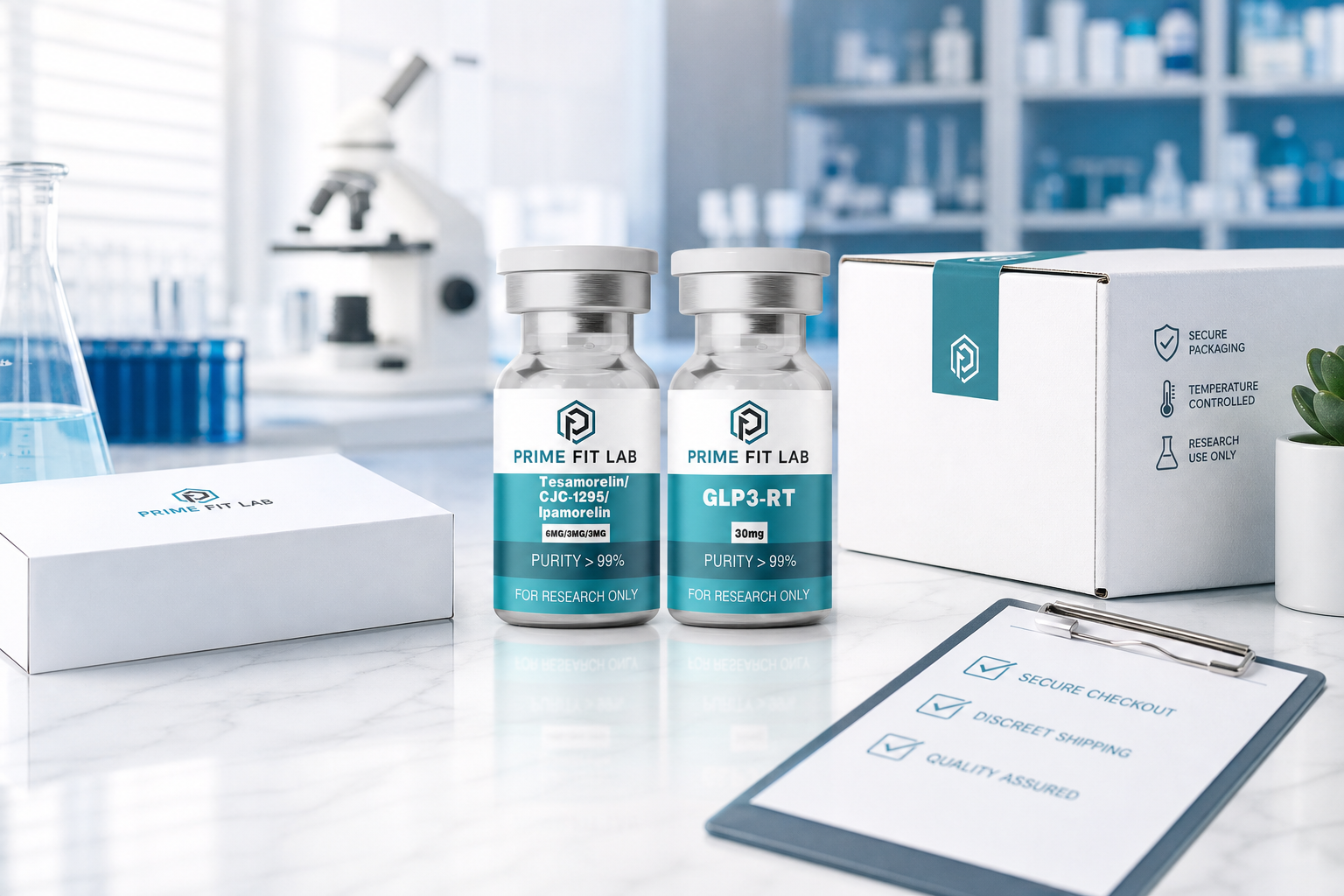
A research-compound order is only as dependable as the documentation, handling standards, and fulfillment process behind it. When you buy peptides for research use, the objective is not to chase the lowest listed price. It is to source clearly labeled material from a supplier that makes quality claims visible, supports those claims with accessible records, and ships the correct order without unnecessary friction.
For experienced buyers, that standard changes how an online catalog should be evaluated. Product availability matters, but so do lot references, stated purity, third-party testing, checkout security, and the ability to reorder established items efficiently.
Before purchasing, start with the research peptide catalog and compare the product documentation for CJC-1295 No DAC 10mg and BPC-157 10mg.
Before You Buy Peptides for Research Use
Start with the product page, not the promotional claim. A credible research-use-only listing should identify the compound, format, and stated amount with enough clarity to distinguish it from adjacent catalog items. BPC-157, TB-500, CJC-1295, tesamorelin, ipamorelin, sermorelin, retatrutide, GHK-Cu, NAD+, and PT-141 may all appear in the same catalog, but they should not be presented as interchangeable products.
Clear category organization is part of purchase control. Individual peptides, multi-compound blends, capsules, liquid sprays, topicals, hydration products, and support supplies serve different research purchasing requirements. A well-organized storefront lets a repeat buyer locate a familiar product quickly while giving a new research buyer enough labeling detail to compare available formats without relying on vague descriptions.
The research-use-only designation should also be direct. Products sold for scientific research are not intended to diagnose, treat, cure, or prevent disease. A supplier that blurs that boundary with therapeutic promises is creating unnecessary uncertainty around the transaction. Firm labeling is not a limitation of a serious catalog. It is part of the quality standard.
Treat Documentation as a Purchase Requirement
A stated 99%+ purity standard is a useful starting point, but it should not be the end of the review. Purity language is most meaningful when it is paired with available certificates of analysis, appropriate product identification, and a clear testing position. Documentation should help the buyer evaluate whether the item being sold aligns with the stated specifications.
Before placing an order, look for a straightforward path to View COA's or comparable product documentation. The strongest records are tied as closely as possible to the product and lot under review. Depending on the compound and testing process, buyers may look for identity confirmation, purity results, lot information, analytical methodology, and contaminant or heavy-metal screening where applicable.
Documentation is especially valuable when comparing vendors that use similar product names or identical strength labels. A 10 mg listing is not automatically equivalent to every other 10 mg listing online. Product presentation, testing transparency, storage practices, and order accuracy all affect whether a catalog can support consistent research purchasing.
A disciplined review should cover five practical points:
- The product name, stated amount, and format match the item needed for the research purchase.
- A COA or testing record is available and relevant to the listed product or lot when possible.
- Purity claims are stated clearly rather than implied through marketing language alone.
- Contaminant and heavy-metal screening claims are presented with appropriate documentation.
- The site maintains explicit research-use-only labeling and avoids disease or treatment claims.
This review takes minutes, and it can prevent the most common purchasing mistake in this category: treating an attractive product page as evidence of verified product standards.
Compare Formats Without Assuming They Are Equal
Catalog breadth is useful only when product formats are separated clearly. A buyer comparing a single research peptide with a blend should be able to see the distinction immediately. The same applies to capsules, sprays, topical products, and support supplies. Each category has its own labeling and documentation considerations, and a supplier should not force buyers to sort through mixed listings to find basic product details.
Blends deserve particular attention. They can simplify procurement when the listed components and total amounts are transparent, but they are not a substitute for reviewing the exact formula. The relevant question is not whether a blend is more convenient in general. It is whether its stated composition fits the defined research requirement and whether its documentation is as clear as the documentation expected for an individual compound.
Strength labels should be read precisely as well. Buyers familiar with milligram amounts know that a number alone does not provide a complete purchasing picture. Confirm the product form, total listed amount, packaging details, and any relevant instructions supplied by the vendor. Avoid making assumptions based solely on a familiar compound name or a previous purchase from another storefront.
Evaluate the Storefront Behind the Product
Research purchasing is operational. Once product documentation meets the required standard, the next question is whether the supplier can process and fulfill the order reliably. A clean product catalog should be backed by secure payment options, transparent shipping terms, responsive order support, and account tools that make repeat purchasing manageable.
Secure card and PayPal checkout are practical trust signals because they give buyers established ways to complete an order. Account-based ordering also has value for repeat customers who need to review order history, confirm prior product selections, or keep purchasing activity organized. These details may seem secondary to the compound itself, but they reduce avoidable ordering errors.
Shipping policy should be equally easy to find. For US-based buyers, same-day shipping support, carrier service level, order cutoff considerations, and free-shipping thresholds can materially affect the purchase decision. If an order requires several products, an advertised threshold such as free FedEx 2 Day shipping on orders over $120 should be evaluated alongside the total cart value, not as an afterthought after checkout.
Fast fulfillment is useful, but accuracy is the priority. The best transaction is not merely one that ships quickly. It is one where the product selected, the item received, the documentation reviewed, and the order record all stay aligned.
Price Is a Factor, Not the Entire Decision
Price comparisons are normal in the research marketplace, particularly for frequently purchased compounds. However, the lowest price can conceal differences in testing access, product presentation, inventory practices, shipping costs, and customer support. A lower unit price may not represent the lower total cost if the supplier provides limited documentation, unclear shipping terms, or inconsistent availability.
It depends on the order. For a single item, product cost and shipping may drive the decision. For a larger purchase, a free-shipping threshold, reliable inventory, and the ability to consolidate multiple research-use-only products into one order can provide better operational value. Repeat purchasers may also place more weight on account history and consistent catalog organization than a first-time buyer would.
Prime Fit Lab is positioned around this practical decision framework: third-party-tested product presentation, stated 99%+ purity standards, COA access, secure checkout, and fast US fulfillment. Those factors give buyers concrete criteria to review before adding products to a cart.
Keep the Purchase Process Controlled
A controlled purchase process is simple. Confirm the exact item, review the available documentation, verify the research-use-only designation, check shipping terms, and retain the order confirmation and relevant product records. Do not substitute products casually because names look similar or because one format appears more convenient. If a product page does not provide enough clarity to make a confident research purchase, pause rather than filling the gap with assumptions.
The strongest research-compound suppliers make that discipline easier. They present products clearly, support their quality claims with accessible information, protect the transaction, and move orders through fulfillment with consistency. Review the available documentation before you add an item, and let the evidence on the product page determine whether it belongs in your research order.