
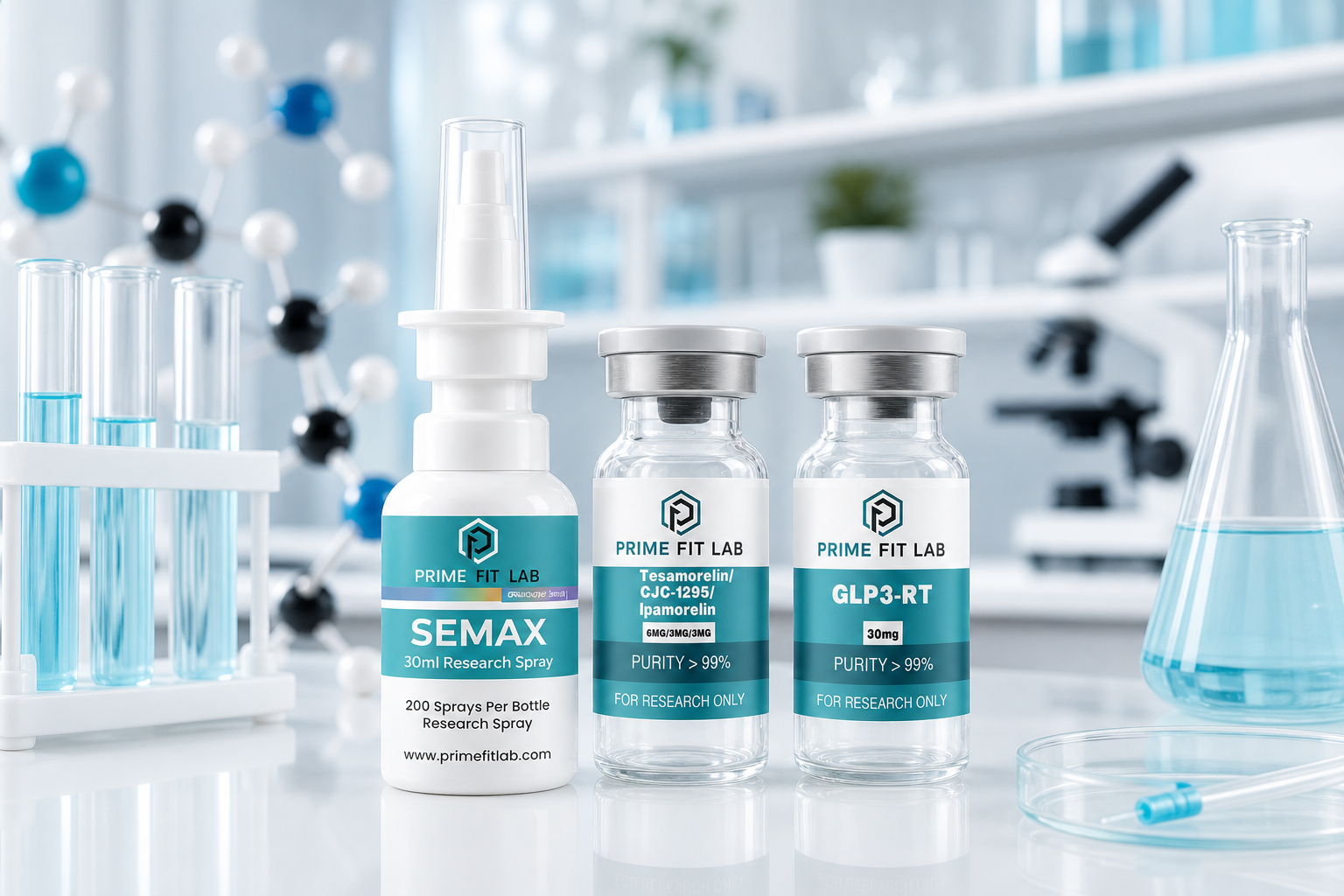
A vial label can list a familiar compound name and a milligram strength, but that alone does not establish what is inside. For buyers asking what are research peptides, the useful answer begins with the product’s intended use, identity documentation, handling requirements, and quality-control record - not with marketing claims.
Research peptides are supplied for legitimate scientific and laboratory research. They are not approved medications, dietary supplements, or products intended for human or veterinary use. That boundary matters. A research-use-only designation is not a casual disclaimer; it defines how a compound should be represented, evaluated, and purchased.
Examples of single-compound research listings include CJC-1295 No DAC 10mg and TB-500 10mg, both organized within the research peptide catalog.
For serious buyers, the question is less about hype and more about standards: Is the compound correctly identified? Is purity supported by testing? Is a certificate of analysis available? Was the order packaged and fulfilled with the consistency needed for research procurement?
What Are Research Peptides, Exactly?
Peptides are short chains of amino acids. Amino acids are the chemical building blocks that can form larger proteins, while peptides are generally shorter sequences with specific structures and research relevance. Their size, sequence, purity profile, and physical form can all affect how they are evaluated in a laboratory setting.
The term research peptide describes a peptide supplied specifically for research applications. It does not automatically describe a therapeutic effect, clinical outcome, or approved use. A peptide may be studied because it is structurally related to an endogenous signaling sequence, because it interacts with a target of scientific interest, or because it is useful in analytical, biochemical, or formulation research.
Common examples in the research marketplace include BPC-157, CJC-1295, TB-500, tesamorelin, ipamorelin, sermorelin, AOD-9604, GHK-Cu, and PT-141. These names are often grouped together online, but they are not interchangeable. They differ in sequence, molecular properties, research history, and intended research context. A disciplined supplier organizes compounds by identity and format rather than treating every item as a generic “peptide.”
Research-Use-Only Is a Defined Boundary
Research-use-only, often abbreviated RUO, means a product is offered for laboratory research and analytical purposes only. It is not intended to diagnose, treat, cure, or prevent disease. It is also not intended for ingestion, injection, topical application, or any other human or animal use.
This distinction separates research compounds from regulated pharmaceutical products. Pharmaceutical products are manufactured, approved, labeled, prescribed, and distributed within a substantially different regulatory framework. A research compound may be useful for scientific investigation, but it should never be presented as a substitute for medical care, prescription treatment, or a consumer wellness product.
That is why responsible product information avoids administration guidance, dosing protocols, disease claims, and outcome promises. Those claims do not belong in a research-use-only catalog. A reliable retailer is clear about the boundary rather than blurring it to make a sale.
Why Peptide Quality Is More Than a Purity Percentage
A stated 99%+ purity level is a meaningful starting point, but it is not the full quality picture. Purity refers to the proportion of the target compound relative to detectable related substances under a particular analytical method. It does not, by itself, answer every procurement question.
For example, two products can carry similar purity claims while differing in identity confirmation, residual contaminants, lot consistency, packaging integrity, storage history, or documentation quality. The value of a purity figure depends on the testing behind it and whether the buyer can review the relevant records.
A sound evaluation process considers several connected controls:
- Identity testing helps confirm that the material corresponds to the stated compound.
- Purity analysis evaluates the relative presence of the target material and related impurities.
- Contaminant screening can address concerns such as heavy metals or other unwanted material, depending on the product and test panel.
- Lot-specific documentation gives the buyer a record tied to the material being evaluated.
Certificates of analysis, commonly called COAs, are central to this process. A COA should be treated as documentation to review, not as a decorative badge. Buyers should confirm the compound name, lot reference, test methods or reported results where available, and whether the document aligns with the item being purchased. If a supplier claims third-party testing, the documentation should support that claim with enough specificity to be useful.
Format, Labeling, and Consistency Matter
Research compounds appear in more than one format. Lyophilized peptide material, capsules, liquid sprays, topical products, multi-compound blends, and supporting research supplies may all occupy the same catalog. The format changes the practical procurement questions, even when the category language looks similar.
A lyophilized product, for instance, should have a clear compound identity, stated amount, and appropriate packaging information. A blend requires even more precision because the buyer needs to know each listed component and its stated quantity. A product name alone is not enough when multiple active compounds are involved.
Label accuracy is operationally important. The label should clearly distinguish compound names, strengths, product formats, and lot information where applicable. This reduces avoidable confusion when comparing inventory, reviewing documentation, or maintaining internal research records. Consistent product presentation also makes repeat ordering more efficient, particularly for buyers who need to compare the same item across lots or purchase cycles.
How to Evaluate a Research Peptide Supplier
The research-compound market is crowded, and broad claims are easy to make. A supplier should be assessed by the details it makes available and the consistency of its operations.
Start with documentation. Look for accessible COAs and transparent statements about purity standards and screening practices. “Tested” is less useful than a clear explanation of what is tested, how results are associated with a lot, and what records a purchaser can review.
Next, consider catalog discipline. Products should be organized in a way that makes compound identity, stated strength, and format easy to compare. A clean category structure is not just an e-commerce convenience. It reduces ordering errors and helps purchasers locate the specific research material they need without relying on vague product descriptions.
Fulfillment is another practical quality signal. Secure checkout, order confirmation, responsive support, protective packaging, and reliable shipping timelines affect the procurement experience. Fast shipping does not replace testing, but it does matter when a buyer needs dependable order processing and consistent delivery within the United States.
Prime Fit Lab approaches this standard through third-party-tested product presentation, stated 99%+ purity standards, COA access, secure payment options, and efficient US fulfillment. Those features are most useful when viewed as one system: documentation supports evaluation, organized listings support accurate selection, and dependable fulfillment supports repeat procurement.
What Research Peptides Are Not
Research peptides are not a shortcut around clinical standards. They are not automatically safer because they are sold online, and they are not validated for personal use because a compound name is familiar in performance, longevity, or fitness discussions.
They are also not interchangeable with one another. Similar-sounding compounds can have different sequences, different analytical considerations, and different research profiles. Multi-compound products should not be evaluated as though they were identical to single-compound materials. The more complex the material, the more important it is to verify the stated composition and associated documentation.
Finally, a research peptide is not defined by a dramatic claim. It is defined by its chemical identity, its documented specifications, and its research-use-only status. Suppliers that prioritize those facts create a more dependable foundation for informed purchasing.
A Better Standard for Research Procurement
The right question is not simply whether a product is available. It is whether the supplier provides enough information to evaluate the material with discipline. Clear labeling, lot-aware documentation, stated purity standards, contaminant screening claims, secure purchasing, and reliable shipping all contribute to that answer.
For knowledgeable buyers, the strongest research-compound storefronts do not ask customers to accept vague assurances. They make the product identity and quality framework easier to verify. That is the standard worth carrying into every research peptide purchase.