
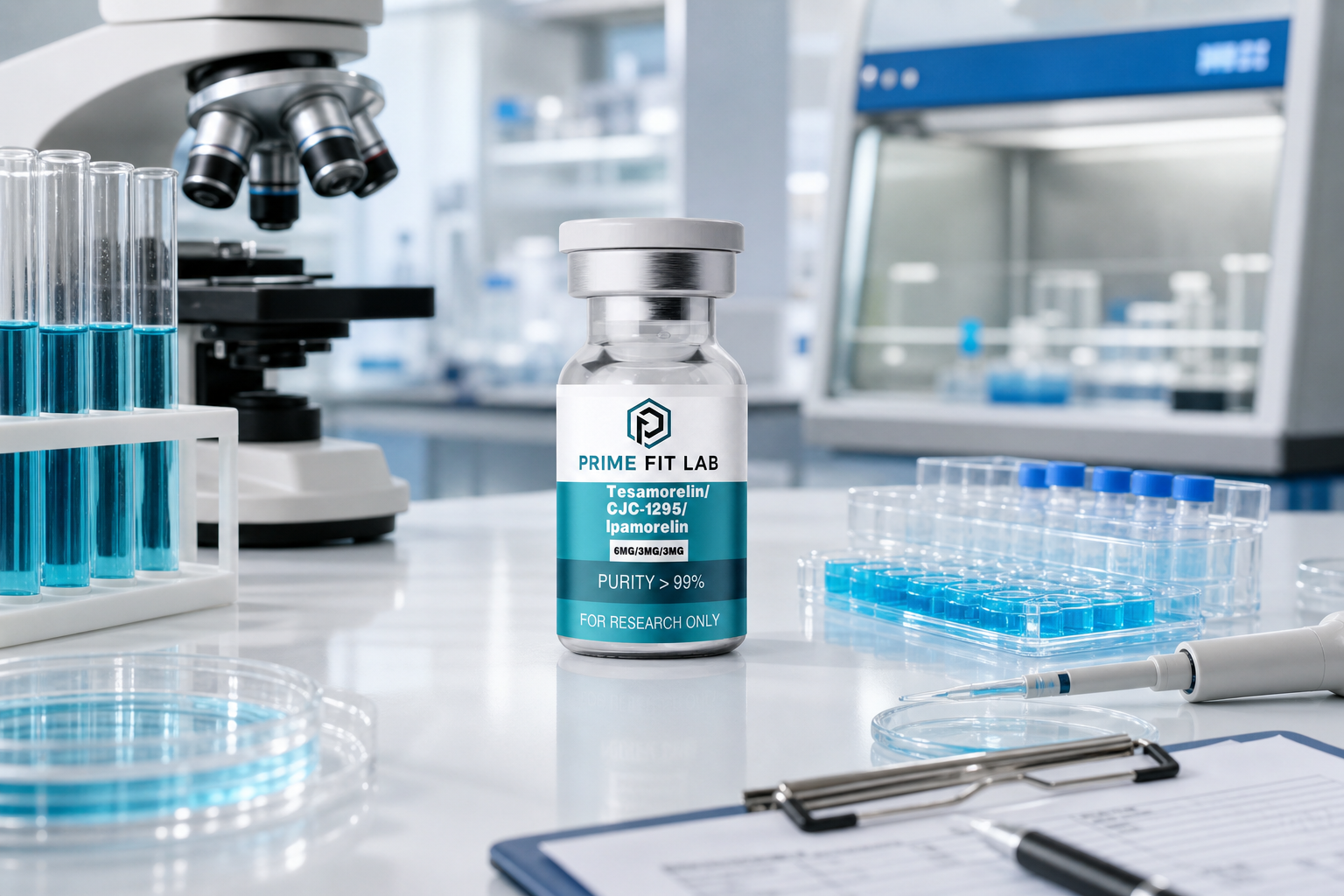
A stated purity percentage is only one data point. Research peptide contaminant screening is what helps determine whether a reported assay result is supported by relevant, lot-specific analytical work. For buyers comparing research-use-only materials, the practical question is not simply whether a product page says 99%+ purity. It is whether the available documentation identifies the lot, the method, the analyte, and the limits used to evaluate unwanted material.
That distinction matters because a high assay value and a complete contaminant profile answer different questions. Assay testing measures the amount of the intended peptide relative to detectable related material under a defined method. Contaminant screening examines whether separate, potentially undesirable substances are present. Both belong in a disciplined quality-control process.
What Research Peptide Contaminant Screening Should Cover
A useful screening program begins with the material and the format. A lyophilized peptide, a multi-compound blend, a liquid spray, and a topical may require different testing priorities. The analytical panel should reflect realistic risks introduced by synthesis, purification, handling, formulation, packaging, and storage.
For a single research peptide, identity and assay are generally foundational. Identity testing is intended to confirm that the material corresponds to the expected compound. Assay testing, commonly supported by chromatographic methods such as HPLC or UHPLC, estimates purity and can show the presence of peptide-related impurities. Mass spectrometry may provide additional identity confirmation where applicable.
These results are valuable, but they should not be treated as a blanket substitute for contaminant testing. A chromatogram that supports a 99%+ purity claim does not automatically establish the absence of elemental impurities, residual solvents, microbial contamination, or other analytes outside that specific method's scope.
The appropriate panel depends on the product. Common quality-control categories include residual solvents from synthesis or processing, elemental impurities or heavy metals, bioburden or microbial screening for applicable formats, and endotoxin evaluation when a product and its intended research workflow make that test relevant. Testing for residual reagents, counterions, moisture content, or degradation products can also be relevant depending on the compound and dosage form.
There is no single universal panel that fits every research material. A buyer should be cautious of suppliers presenting a generic testing statement as if it proves every possible quality attribute for every product. Specific methods and lot-level records carry more weight than broad marketing language.
Purity Is Not the Same as Contaminant Control
Purity and contaminant control work together, but they are not interchangeable. A peptide can return a strong chromatographic purity result while still requiring a separate heavy-metal panel. Conversely, a favorable elemental impurity result does not prove peptide identity or assay.
This is particularly relevant for complex blends. When multiple active compounds are combined, testing needs may become more involved because the method must distinguish intended components from related impurities and formulation variables. A single number without method context may be less informative than a clear certificate that identifies the material, batch, assay basis, and applicable screening results.
How to Read a COA Before You Order
A certificate of analysis should be treated as a quality document, not as a decorative badge. The strongest COAs allow a knowledgeable buyer to connect the document directly to the product being evaluated.
Start with the identifying information. The product name, lot or batch number, date, and supplier or laboratory reference should be clear enough to establish that the document belongs to the material currently offered. A COA with no lot designation, no date, or no way to match it to inventory provides limited decision value.
Next, review the method and specification. A result such as "Pass" may be useful, but it is more meaningful when paired with a stated limit and test method. For example, an elemental impurity screen should identify the elements evaluated and the acceptance criteria where possible. An assay result should state the reported percentage and the method used. Identity confirmation should identify the technique rather than relying only on a generic label.
Pay attention to whether the report is specific to the finished material or only to an upstream ingredient. For blends, sprays, capsules, and topicals, raw-material documentation can be informative, but it is not always equivalent to finished-product verification. Formulation and packaging can introduce their own variables. The right level of documentation depends on the product category and the buyer's research requirements.
Dates also deserve context. A test date that predates the offered lot, or an old COA repeatedly used across changing inventory, should prompt questions. Testing is strongest when it is linked to the actual batch being sold rather than a representative historical sample.
Questions That Separate Documentation From Claims
Before selecting a supplier, evaluate whether the available information can answer a few direct questions: Is the certificate tied to the listed lot? Does it identify the testing method? Does the panel match the claim being made? Are assay, identity, and contaminant results distinguished rather than combined into a single vague statement?
Also consider who performed the analysis. Third-party testing can add independence to the process, particularly when the report identifies the laboratory and the applicable methods. It does not mean every possible contaminant has been tested, and it should not be interpreted that way. Its value comes from transparency, scope, and the ability to review the actual results.
A supplier that makes certificates available and states its quality standards gives buyers a clearer basis for comparison. At Prime Fit Lab, product presentation centers on stated 99%+ purity standards, third-party-tested status, contaminant and heavy-metal screening claims, and COA access for research-use-only inventory. Buyers should still review documentation against the specific item and lot they intend to order.
Screening Priorities Change by Product Format
The screening conversation should not stop at the name of the peptide. Format affects what needs attention. Lyophilized research peptides are commonly evaluated for identity, assay, related substances, and applicable chemical contaminants. Moisture can also matter because it can affect storage behavior and material consistency.
Liquid sprays introduce formulation variables beyond the active ingredient. Preservatives, solvents, pH adjusters, water quality, fill consistency, and container compatibility may all be relevant to finished-product review. A strong raw-material COA is useful, but it does not independently characterize the final liquid formulation.
Capsules and topicals require similar discipline. Excipients, carriers, capsule shells, and manufacturing handling may change the risk profile. Screening should account for the finished format rather than assuming an active-compound assay fully represents the completed product.
Support supplies also deserve basic procurement checks. Sterile or clean handling claims, packaging integrity, and traceable sourcing matter when supplies are part of a controlled research workflow. Product categories differ, but documentation standards should remain clear and specific.
What Testing Cannot Tell You
Even detailed screening has limits. A COA represents a sample, a method, and a point in time. It does not guarantee future storage conditions, handling after delivery, or fitness for an application outside the test scope. It also does not turn a research compound into an approved drug product.
For that reason, claims should remain proportionate to the evidence. A contaminant screen may support that certain analytes were tested against defined limits. It should not be stretched into claims about disease treatment, human safety, clinical outcomes, or therapeutic suitability. Research-use-only materials are not intended to diagnose, treat, cure, or prevent disease.
Storage and handling remain part of quality control after purchase. Keep lot records, retain associated COAs, inspect packaging on arrival, and follow the supplier's stated storage guidance. If a product is used across multiple research activities, maintaining an internal record of lot number, receipt date, and documentation can prevent avoidable confusion later.
A More Disciplined Buying Standard
Research peptide contaminant screening is most useful when it is approached as a verification process, not a slogan. Look for lot-specific certificates, distinguish assay from separate contaminant panels, and match the scope of testing to the material and format under review. Fast fulfillment and a clean catalog make reordering easier, but documentation is what supports a defensible purchasing decision.
The best next step is simple: before adding a research compound to an order, review the available COA and ask whether it gives you enough lot-specific information for your intended research workflow. If it does not, choose clarity over assumption.