
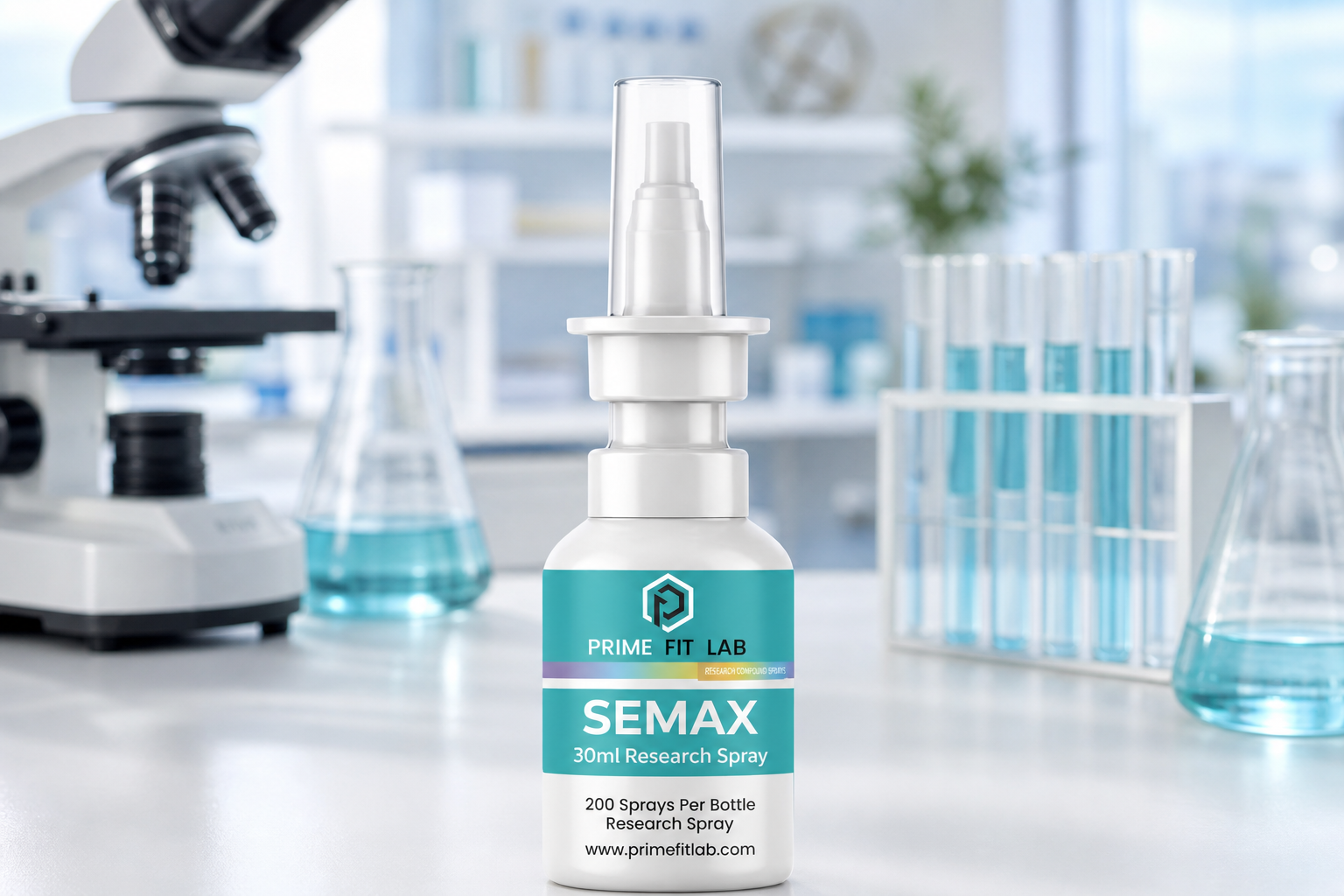
A liquid spray format can make catalog comparison faster, but it also creates more variables to verify before an order is placed. For buyers evaluating liquid spray research compounds, the relevant questions are not therapeutic or lifestyle claims. They are whether the listing clearly identifies the compound, concentration, carrier, fill volume, testing documentation, packaging, and research-use-only status.
A spray is a delivery format, not a shortcut around quality control. A well-organized research catalog should make the information needed for product comparison easy to find without forcing buyers to infer what is in the bottle or how the product was prepared.
Why Format Details Matter for Liquid Spray Research Compounds
With a lyophilized vial, product comparison often begins with the labeled mass and supporting documentation. With a liquid spray, the concentration and total fill volume become equally important. A label that names a compound but does not state its concentration or bottle volume leaves too much unresolved for a disciplined research purchase.
The spray mechanism also matters. Buyers should distinguish between total compound content in the bottle and the amount represented by a stated spray volume, when that information is supplied. Those figures are not interchangeable. Clear product presentation separates them so that catalog review remains consistent across different formats and strengths.
Liquid preparations introduce formulation questions that do not apply in the same way to dry material. The carrier, any stated excipients, packaging material, closure quality, and storage guidance all affect whether the listing is sufficiently transparent for the intended research context. Details should be specific, not implied by product photography or broad marketing language.
Start With Documentation, Not Product Claims
For research-use-only inventory, documentation is the foundation of a credible purchase decision. A product page should state the identity of the compound and provide a direct path to the applicable certificate of analysis. Third-party testing claims carry more weight when the buyer can review documentation rather than relying on a generic badge.
A useful COA review begins with the basics: confirm that the compound name aligns with the listing, check the reported analytical information, and look for a lot or batch reference when available. Buyers should also consider whether the supplier states its purity standard and whether it addresses relevant contaminant or heavy-metal screening. A 99%+ purity claim is meaningful only when it is part of a broader, traceable quality-control presentation.
Documentation should match the actual item under consideration. A COA for a different concentration, an unrelated format, or an unclear lot reference is not the same as product-specific support. This is especially relevant for liquid sprays, where the finished formulation deserves the same disciplined review as the active research compound.
Compare the Label as a Technical Record
The strongest liquid-spray listings are concise but complete. They provide enough information for an experienced buyer to identify exactly what is being ordered and to compare it against adjacent products in the catalog. At minimum, a technical product presentation should make the following points clear:
- compound identity and stated concentration
- total bottle volume and, where stated, spray-volume information
- carrier or formulation details
- lot, batch, or documentation reference where applicable
- storage and handling instructions
- a firm research-use-only designation
This level of clarity reduces avoidable ordering errors. It also allows repeat buyers to compare a prior order against current inventory without decoding inconsistent labels.
There is a trade-off between a highly detailed listing and an overbuilt page that slows down ordering. The practical standard is simple: the product page should answer the questions that affect identification, documentation, format, and handling. It should not substitute promotional language for technical specifics.
Packaging and Handling Are Part of Product Consistency
A liquid research product is exposed to different operational risks than a sealed dry vial. The bottle, spray assembly, seal, label adhesion, and protective outer packaging all contribute to the condition in which the item arrives. Quality presentation is not cosmetic. It supports clear identification and helps reduce confusion after delivery.
Storage instructions should be followed exactly as provided on the product label or supplier guidance. Buyers should avoid assuming that one liquid compound has the same storage requirements as another. Light sensitivity, temperature expectations, and handling directions can vary by formulation. When instructions are not available or appear contradictory, the appropriate response is to seek clarification before ordering rather than making assumptions.
For laboratory-oriented inventory management, retain the original labeled container and keep the order record with the product documentation. This creates a cleaner chain between the item received, the information reviewed at purchase, and any later reference to the batch or order history.
Evaluate the Supplier’s Operating Standards
A credible supplier makes quality signals visible throughout the buying process, not only in a single product description. Third-party-tested status, purity standards, COA access, secure checkout, and defined fulfillment terms should be presented as operating practices rather than occasional promotions.
Fast shipping has practical value, but it should be paired with clear order processing expectations. US buyers often need to know whether orders are supported for same-day processing, which carrier service is used, and when a shipping threshold applies. For example, a defined free FedEx 2 Day shipping threshold gives repeat purchasers a concrete way to plan larger orders rather than estimating delivery incentives at checkout.
Secure account-based checkout also improves repeat-order accuracy. Order history can help confirm a previously selected format, concentration, or companion supply item. That convenience does not replace documentation review, particularly if a product listing or batch has changed, but it makes routine catalog management more efficient.
Prime Fit Lab organizes research inventory across peptides, blends, liquid sprays, capsules, topicals, hydration and recovery products, and support supplies so experienced buyers can locate formats without unnecessary catalog clutter. The operative standard remains the same across categories: clear product identity, stated testing expectations, and research-use-only boundaries.
Keep Research-Use-Only Boundaries Clear
Liquid sprays can invite vague language because the format is familiar to consumer wellness products. That familiarity should not blur the regulatory boundary. Research compounds are not approved drugs, and research-use-only products are not intended to diagnose, treat, cure, or prevent disease. They are not presented for human or veterinary use.
This distinction should be visible on the product page, label, and supporting materials. A supplier that combines technical specifications with a clear research-use-only notice is providing a more reliable framework than one that relies on implied outcomes or unsupported use cases.
Experienced purchasers should also avoid treating dosage-style language as a clinical instruction. In a research catalog, concentration, volume, and formulation data are product-identification details. They are not medical guidance. Keeping that separation intact protects the integrity of the purchasing process and the stated purpose of the inventory.
A More Efficient Way to Review a Spray Listing
Before adding a liquid spray to cart, review the listing in a fixed order: identify the compound, verify the format and concentration, inspect available COA and testing information, read storage details, and confirm the research-use-only statement. Then check fulfillment terms and make sure the selected item matches the intended order record.
This sequence is faster than comparing price first and investigating details later. A lower listed price has limited value if the concentration is unclear, documentation is unavailable, or the product presentation does not establish what is actually being purchased. Conversely, a complete listing gives buyers a defensible basis for comparing value across formats.
The right liquid spray is not defined by the most aggressive claim. It is defined by whether the supplier has made the product easy to identify, document, handle, and reorder within a clearly stated research-use-only framework. When those controls are visible before checkout, the purchase process stays efficient and the catalog remains useful long after the first order.